5 Drawing Skills That Instantly Improve Your Art
If you’ve ever felt stuck with your drawings or unsure what to practice next, you’re not alone. Most artists don’t struggle because they lack talent, they struggle because they haven’t been shown the right fundamentals in a simple, clear way.
Here are five essential drawing techniques that quietly power almost every great piece of art you’ve ever seen.
1. Gesture Drawing
Learning to capture life, not just shape
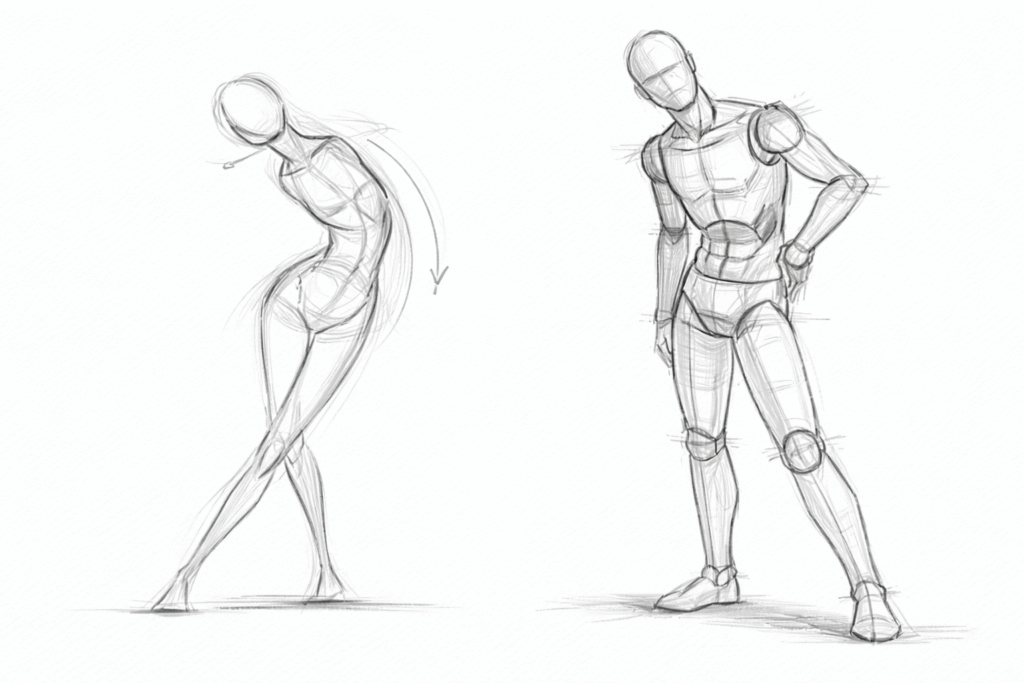
Gesture drawing is all about movement and energy. Instead of worrying about details, you focus on the flow of the body or subject.
Think of it like this: you’re trying to capture the story of the pose in just a few lines.
- Use loose, quick strokes
- Focus on the spine and main action line
- Keep drawings short, 30 seconds to 2 minutes
This is where your drawings stop feeling stiff and start feeling alive.
2. Construction
Building drawings like they’re made of simple parts
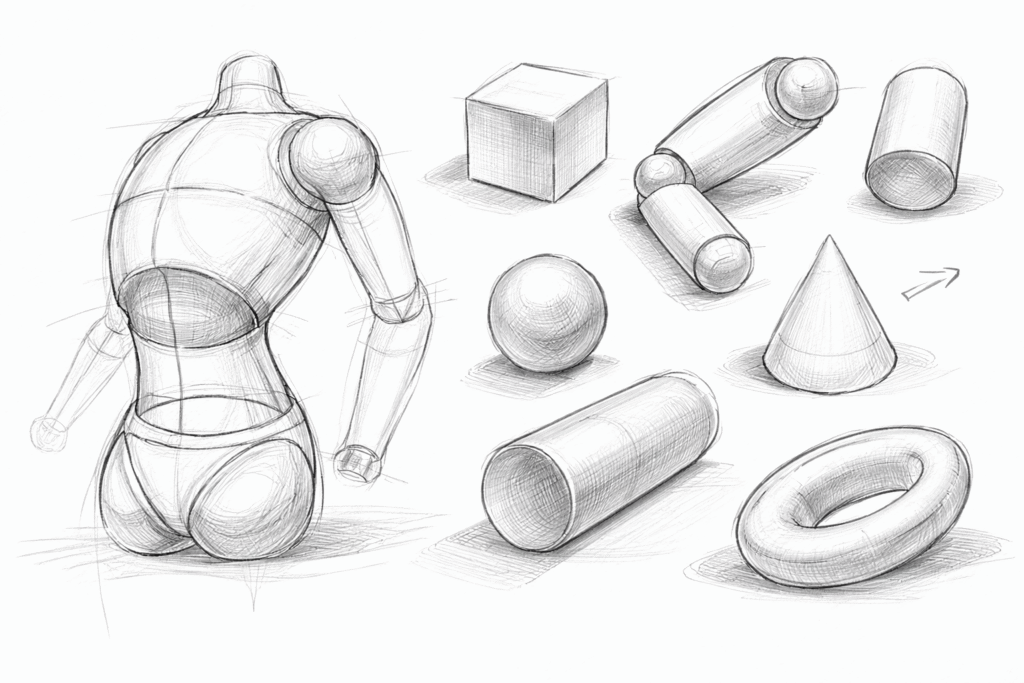
Before details come structure. Construction is about breaking complex subjects into simple 3D forms like boxes, cylinders, and spheres.
A human torso? It can start as a tilted box or ribcage cylinder.
A leg? Just two cylinders connected at a joint.
- Think in 3D, not flat shapes
- Use light guidelines first
- Build up complexity step by step
This technique gives your drawings solidity and makes perspective easier to understand.
3. Shading and Light
Turning flat sketches into believable forms
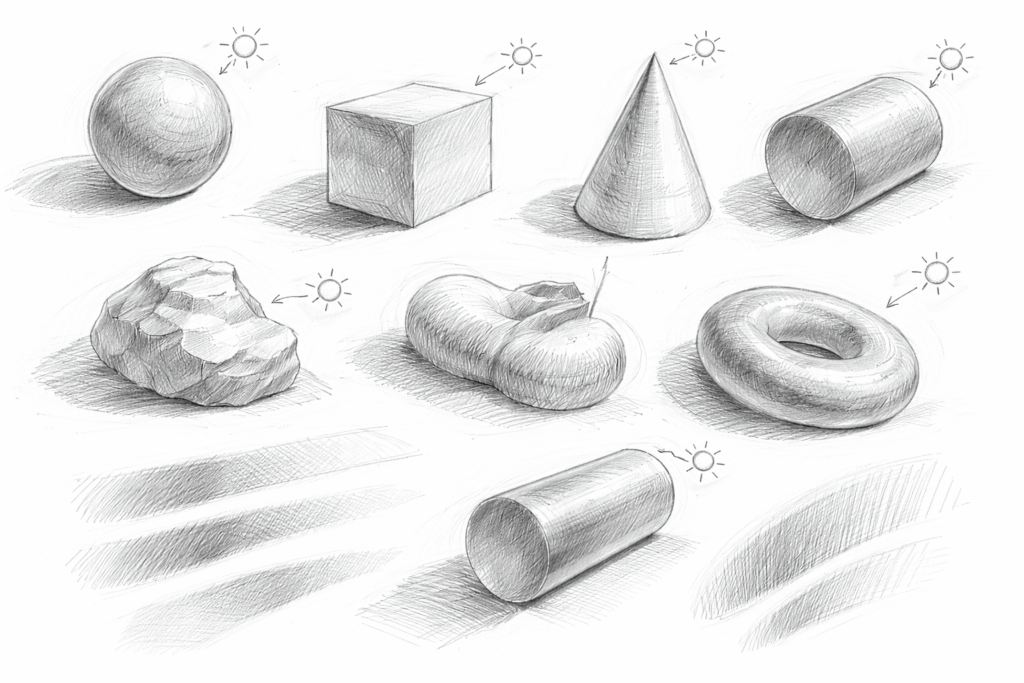
Shading is what makes your drawings feel real. It’s not just about making things darker, it’s about understanding light.
Every object has:
- A light side
- A shadow side
- A core shadow
- Reflected light
- A cast shadow
Start simple with spheres and cylinders. Once you understand how light wraps around them, everything else becomes easier.
4. Line Quality
How your lines speak without words
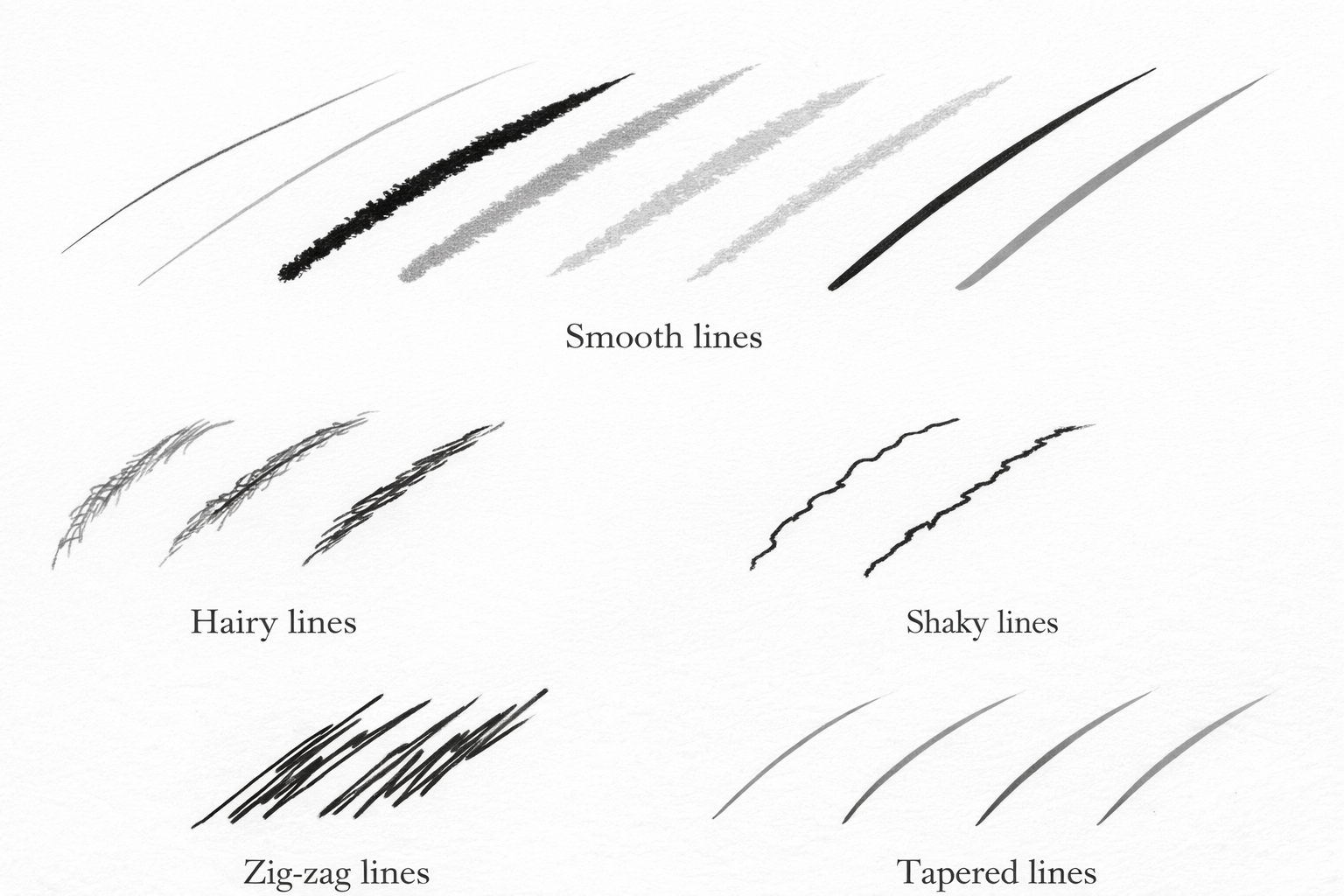
Not all lines should look the same. Some should be bold, others soft. Some sharp, others fading away.
Good line quality adds depth and confidence to your work.
- Use thicker lines for shadow or closer edges
- Use lighter lines for construction or distant forms
- Avoid scratchy, hesitant strokes
A confident line can make even a simple drawing feel professional.
5. Observation
The skill that ties everything together
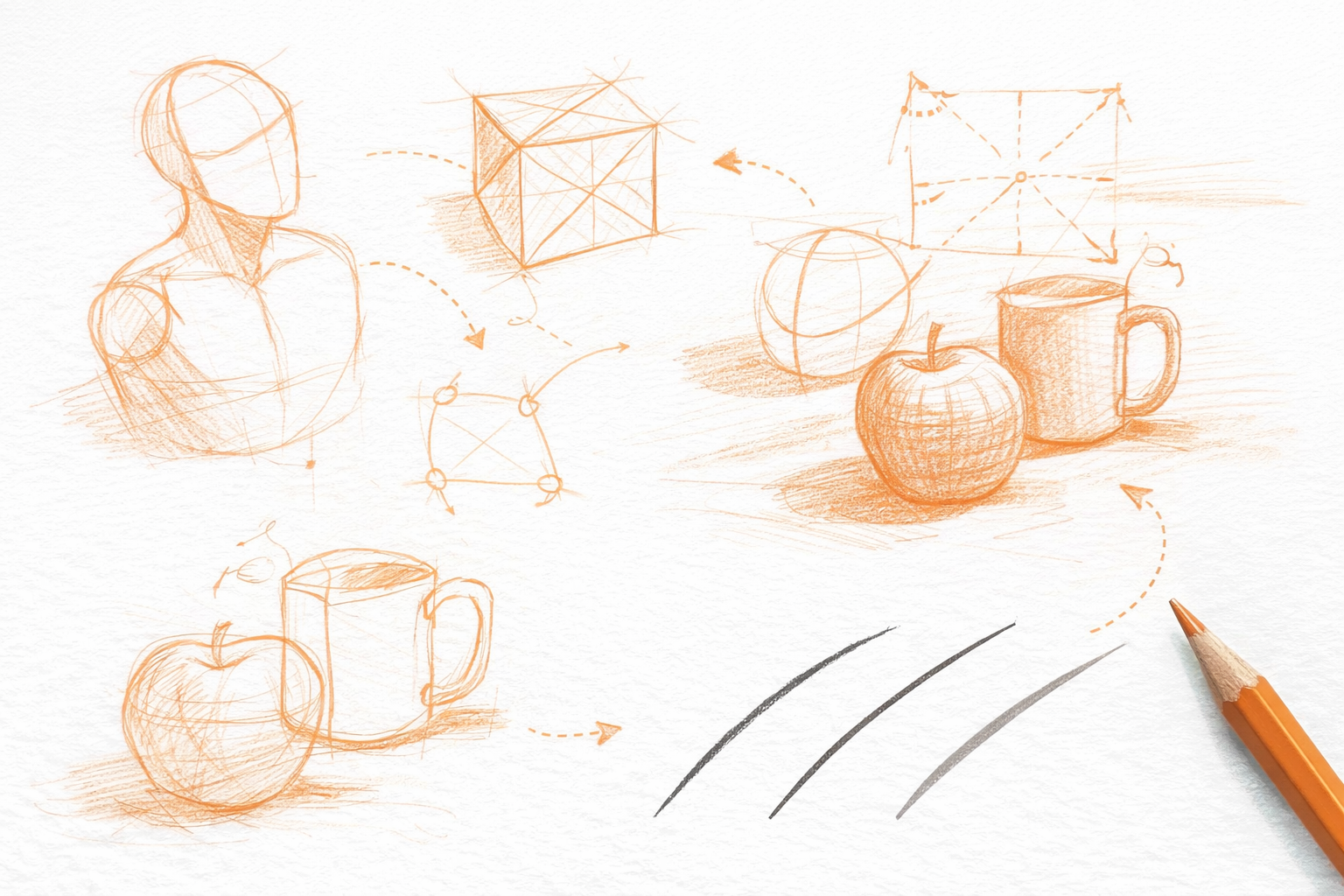
This might be the most important one. Drawing is not just about making marks, it’s about seeing correctly.
Train yourself to notice:
- Angles and proportions
- Negative space
- Subtle changes in light
- Relationships between shapes
Instead of drawing what you think something looks like, draw what you actually see.
Final Thought
You don’t need to master everything at once. In fact, trying to do that usually slows you down.
Pick one of these skills and focus on it for a few days. Then move to the next. Over time, they’ll start to blend together naturally.
That’s when your drawings really begin to change.


Leave a Reply